

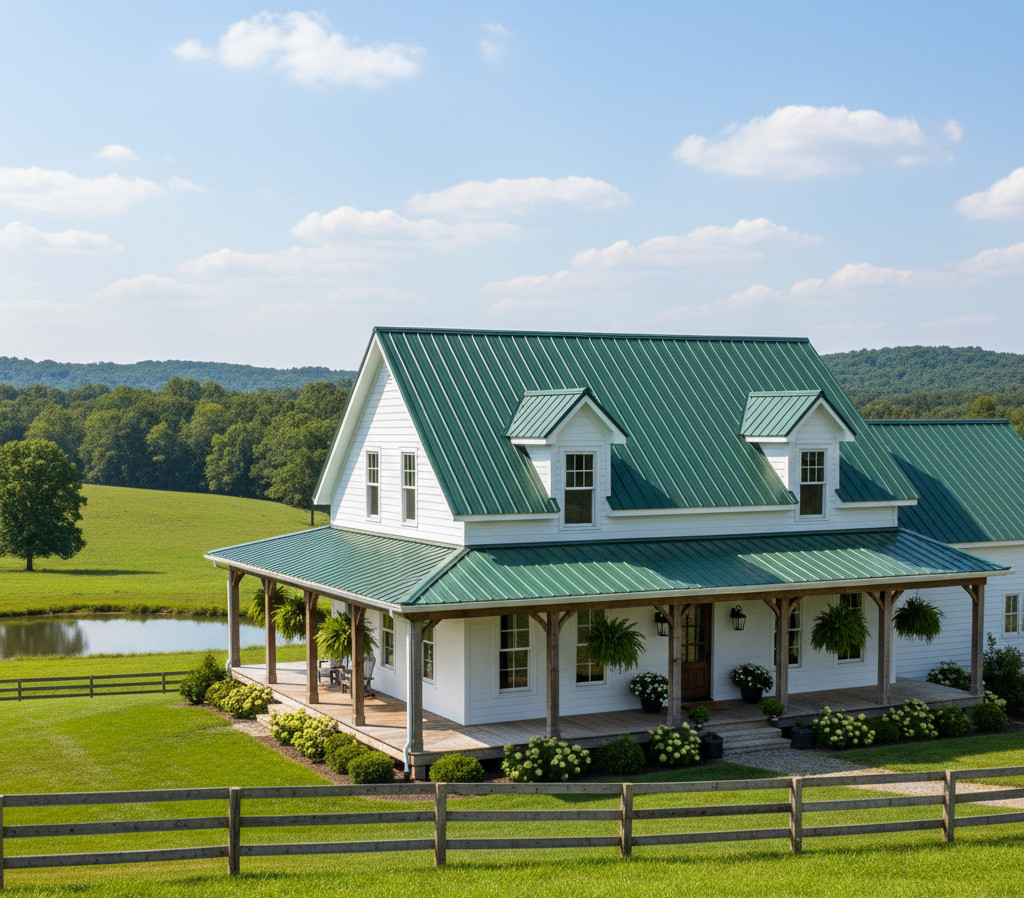
White farmhouse with green metal roof stands as a quiet icon of enduring style, blending the simplicity of rural life with a touch of refined charm. These homes, often found dotting the countryside or tucked into suburban lots, draw from the practical designs of 18th and 19th-century American architecture, where white clapboard siding met functional roofs to create spaces that feel both sturdy and inviting. Imagine pulling up to one after a long day—the crisp white exterior glowing under the sun, contrasted by the deep green roof that seems to anchor the whole structure to the earth. It’s not just about looks; it’s the way these elements come together to evoke a sense of stability, like a reliable old friend who’s seen a few seasons but always welcomes you back. In this piece, we’ll explore the foundational appeal of the white farmhouse and how a green metal roof elevates it into something truly elegant.
Timeless White Farmhouse: A Rustic Foundation
The white farmhouse design pulls from a deep well of history, rooted in the needs of early settlers who built homes that could withstand harsh weather while keeping families close. Crisp white paint on wooden siding wasn’t chosen for flash; it reflected practicality, easy to maintain and brightening dim interiors with natural light. Siding like shiplap or board-and-batten adds texture, giving the walls a subtle rhythm that catches the eye without overwhelming it. Standing in front of one, you can’t help but think about the hands that nailed those boards—generations layering their lives into the wood. It’s this layered quality that makes the style feel alive, not frozen in time, but evolving with each coat of paint or creak of the porch floorboards.
What draws people to the white farmhouse today is its unpretentious scale. Porches wrap around like open arms, offering shaded spots for rocking chairs or just watching the world go by. Windows, often numerous and framed simply, let in views of gardens or fields, blurring the line between inside and out. The interior echoes this with open layouts that flow from kitchen to living areas, centered around a hearth or stove that once cooked meals for large gatherings. I recall visiting a relative’s place like this; the white walls made the rooms feel expansive, even on rainy days, turning what could be a cramped space into a canvas for family stories etched into the furniture and walls. It’s less about perfection and more about the patina of use, where scuffs on the floor tell tales of boots tracking in mud from chores.
Rustic foundation doesn’t mean rough around the edges in a sloppy way—it’s about honest materials that age gracefully. White farmhouses often feature stone or brick accents at the base, grounding the lightness of the siding and adding a tactile contrast. Doors and shutters in deeper tones, like black or navy, provide focal points that guide the eye upward to the roofline. This setup creates a visual harmony, where the house sits comfortably in its surroundings, neither dominating nor hiding. There’s a quiet satisfaction in how these homes adapt to modern tweaks—maybe solar panels discreetly added or a fresh herb garden out front—without losing their core identity. It makes you ponder how architecture can mirror life’s steady progression, offering shelter that’s as much emotional as it is physical.
Green Metal Roof: Enhancing Classic Elegance
A green metal roof on a white farmhouse introduces a cool, verdant hue that plays off the siding’s brightness, creating a palette straight out of a pastoral painting. Metal roofing, typically corrugated or standing seam, has been around since the Industrial Revolution, valued for its longevity and ability to shed water quickly. The green shade—often a muted forest or sage—mimics natural tones without trying too hard, softening the roof’s industrial edge into something approachable. From the ground, it looks like the house is wearing a protective canopy, one that whispers of quiet hillsides even in urban settings. It’s fascinating how this choice shifts the home’s demeanor from purely quaint to quietly sophisticated, inviting longer gazes from passersby.
Durability is where the green metal roof shines, outlasting traditional materials like asphalt shingles by decades with minimal upkeep. It resists fading from sun exposure, holding its color through storms that might batter other roofs. The metallic surface conducts heat away efficiently, keeping attics cooler in summer, though that’s more a byproduct of the design than the intent. Paired with the white exterior, the green roof adds depth, making the farmhouse appear taller and more defined against the sky. I once stayed in a place with this setup during a downpour; the rain danced off the metal in a rhythmic patter, almost musical, turning a soggy evening into something oddly comforting. It’s these small sensory details that elevate the everyday into elegance, reminding us how thoughtful choices in building can enhance daily rhythms.
Beyond the practical, the green metal roof weaves in a thread of subtle contrast that sparks imagination. It frames gables and dormers with a bold outline, drawing attention to architectural details like brackets or vents that might otherwise blend in. In low light, the green takes on a deeper tone, almost velvety, which contrasts beautifully with the white siding’s clean lines, creating shadows that add dimension. This isn’t about stark modernity clashing with tradition; it’s a seamless integration where the roof acts like a signature flourish on a handwritten letter. Reflecting on it, you see how such homes become personal landmarks—points of reference in a neighborhood that stir memories of simpler paces, even as life speeds on around them. The combination invites a sense of rootedness, a place where elegance emerges from restraint rather than excess.
In wrapping up thoughts on the white farmhouse with green metal roof, it’s clear this pairing captures rustic elegance in a way that’s both timeless and adaptable. The white foundation provides the canvas of simplicity and strength, while the green metal roof adds that layer of poised contrast, turning a straightforward structure into something with quiet depth. These homes remind us of architecture’s power to foster connection—to place, to family, to the subtle beauties of daily life. Whether nestled in rolling fields or a quiet cul-de-sac, they stand as testaments to design that endures without demanding attention, inviting us to appreciate the elegance in what lasts.