

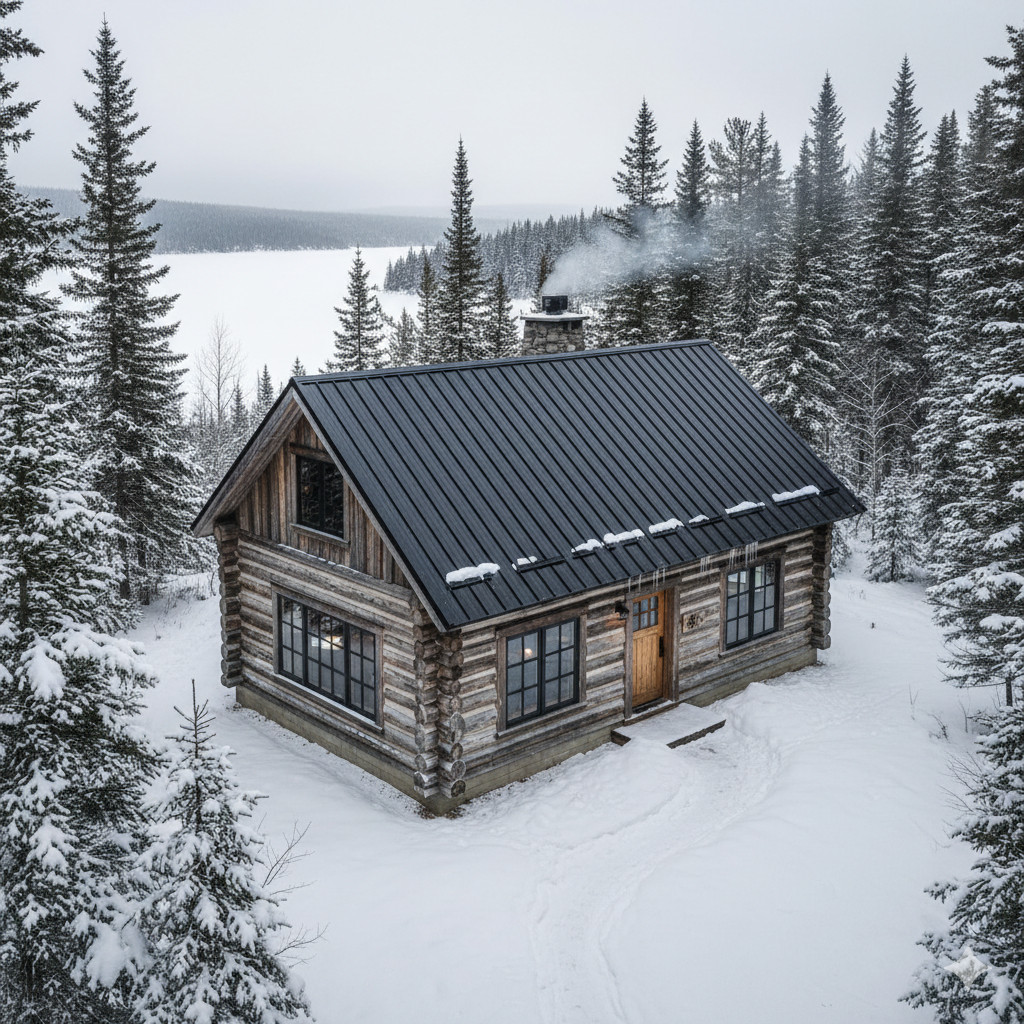
A log cabin with black metal roof stands as a striking emblem of simplicity and strength, drawing the eye across wooded landscapes where wood meets unyielding steel. These structures have roots deep in frontier history, where settlers stacked timber to create homes that blended with the surrounding wilderness. What draws people to this combination today isn’t just the visual punch—it’s the way the dark roof caps the warm tones of the logs, creating a silhouette that feels both grounded and enduring. Imagine pulling up to a place like that after a long drive; the roof’s gleam under sunlight or its subtle sheen in the rain offers an immediate sense of arrival. This pairing isn’t about fleeting trends; it’s a nod to craftsmanship that holds up over seasons and stories. In the sections ahead, we’ll explore how the log cabin’s design persists through time and why that black metal roof amplifies its rustic character in ways that resonate on a personal level.
Enduring Style in Log Cabin Design
Log cabins emerged from practical needs in early American and European settlements, where round or hewn logs were notched and stacked to form walls without much fuss. The design’s genius lies in its adaptability—logs provide natural insulation, and the interlocking corners create a sturdy frame that weathers storms without much complaint. Over centuries, this style has evolved subtly, with modern versions using treated timber to fend off insects and rot, yet the core appeal remains: a structure that looks like it grew from the earth itself. Standing before one, you can’t help but picture families huddled inside during harsh winters, the scent of pine lingering in the air. It’s this unpretentious form that keeps the log cabin relevant, a quiet rebellion against overly polished architecture that screams for attention.
What sets the log cabin apart is how it invites the outdoors in, with large windows framing views of trees or mountains, turning the home into an extension of the landscape. Builders often leave the bark on select logs for texture, or plane them smooth for a cleaner line, but either way, the horizontal emphasis of the stacked wood creates a rhythmic flow that’s soothing to the eye. I’ve always found it fascinating how this design echoes the rings of a tree trunk, layering life upon life in a way that feels almost meditative. Unlike boxy modern homes, a log cabin doesn’t impose; it settles into its spot, becoming part of the narrative of the land. This enduring quality means that even in busier settings, like a suburban edge, it retains an air of escape, pulling you back to basics without effort.
Reflecting on the log cabin’s style, it’s the details that linger—the way chinking between logs seals out drafts while allowing the wood to breathe, or how porches wrap around to catch evening breezes. These elements aren’t just functional; they build a sense of continuity, linking today’s dwellers to those who first raised such walls. In a world of quick builds, the log cabin reminds us of slower paces, where each log is placed with intention. It’s not about perfection but presence, a style that ages gracefully, gaining character from every crack and crevice. This timelessness invites personalization, from stone fireplaces inside to simple gravel paths outside, making each one a unique chapter in a larger story of resilience.
Black Metal Roofs Enhance Rustic Vibes
The black metal roof on a log cabin acts like a bold frame for the wooden body below, its matte or slightly reflective surface contrasting the earthy hues of the logs to heighten the overall drama. Made from durable steel or aluminum, these roofs shed water efficiently and resist corrosion when properly coated, ensuring they last for decades with minimal upkeep. Picture the way snow slides off in clumps during thaws, or how the dark color absorbs heat to melt ice faster—practical perks that align with the cabin’s no-nonsense ethos. Up close, the panels’ subtle seams add a modern edge without overwhelming the rustic base, creating a harmony that’s both tough and inviting. It’s this balance that makes the combination click, turning a simple shelter into something that commands quiet respect.
In terms of visual impact, the black metal roof deepens the cabin’s shadow play, especially at dusk when the logs glow warmly against the cooling sky. This setup amplifies the rustic vibes by emphasizing the cabin’s horizontal lines, making the structure appear lower and more rooted, as if it’s hunkered down against the elements. I’ve noticed how it changes with light—harsh midday sun makes the roof a stark anchor, while softer dawn rays soften the edges, blending the whole into the treeline. Unlike lighter roofs that can wash out the wood’s tones, black metal preserves the depth, letting the natural variations in the logs—from reddish cedar to golden pine—shine through. It’s a subtle enhancement that rewards closer looks, revealing how the materials play off each other in unexpected ways.
Diving deeper, the choice of a black metal roof speaks to a thoughtful integration of form and function, where the dark finish not only looks sharp but also minimizes glare in reflective environments like lakesides. The material’s longevity means fewer repairs, allowing owners to focus on the living rather than the fixing, which fits the cabin lifestyle perfectly. There’s something contemplative about watching rain drum on that roof from inside, the steady patter underscoring the peace of the place. It elevates the rustic appeal without complicating it, offering a canvas for additions like dormers or skylights that let in light while keeping the profile sleek. Ultimately, this roof doesn’t just cover the log cabin; it defines its spirit, a steadfast partner in creating spaces that feel lived-in and lasting.
A log cabin with black metal roof captures an essence that’s hard to pin down but easy to feel—a blend of history, practicality, and understated beauty that pulls at something fundamental. Whether nestled in the woods or overlooking open fields, this design endures because it doesn’t try too hard; it simply is. As you consider your own slice of retreat, think about how that dark roof could crown your vision, adding depth to the wood’s warmth and inviting years of stories under its watch. It’s a timeless appeal that speaks to those who value roots over flash, proving that some pairings just work, season after season.